Last updated 2026-08-19
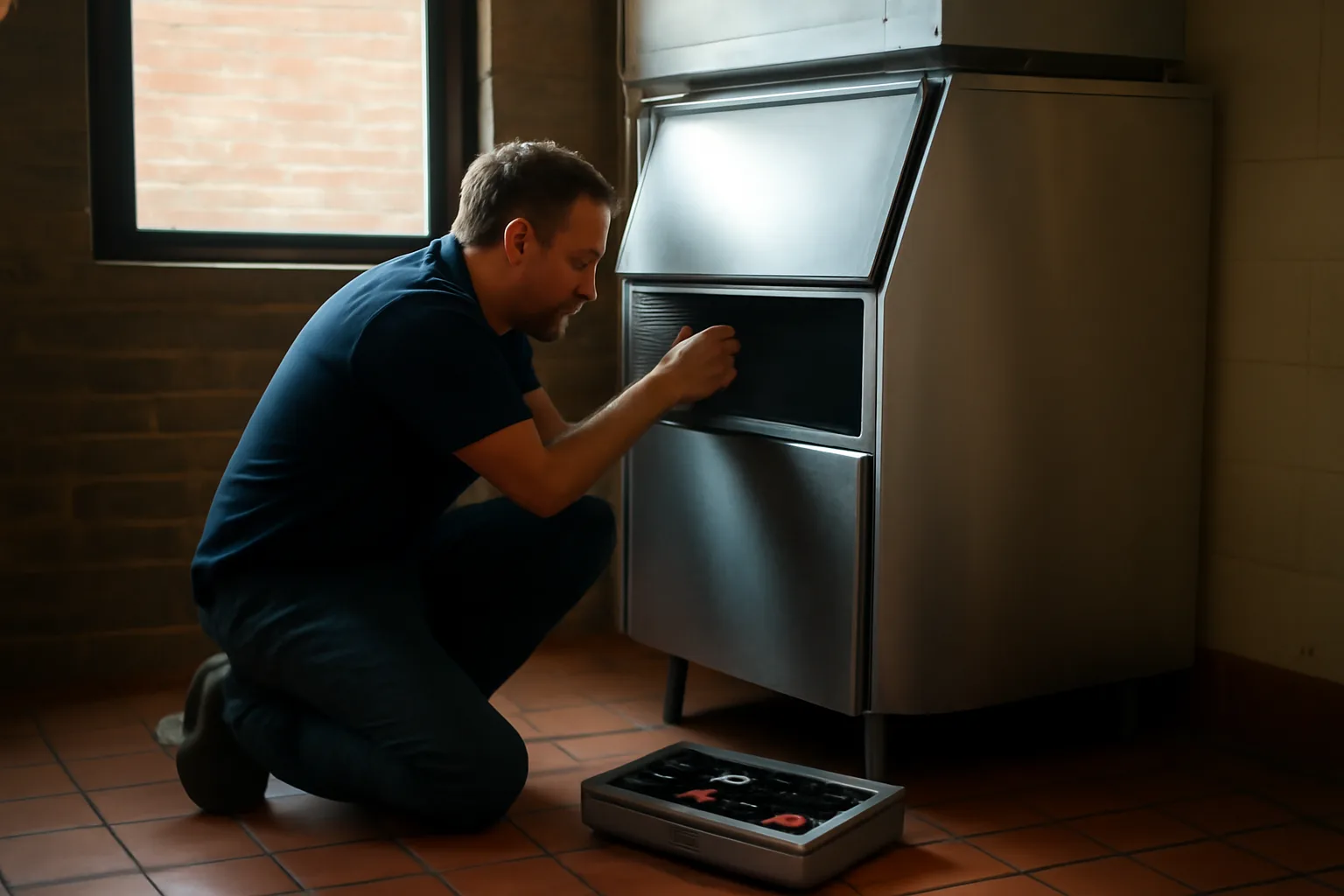
TL;DR
You need EPA 608 to handle ice-machine refrigerant, and Connecticut licenses most refrigeration work under Chapter 393. Budget the 608 exam, DCP trade credentials (confirm current fees), core tools, insurance, and filings if you contract. 608 takes days. A journeyperson path takes years. Confirm fees and timing with DCP. No board publishes a single all-in price.
How much does ice-machine tech cost in Connecticut?
There is no official Connecticut price for becoming an ice-machine tech. Your bill is a stack of federal refrigerant credentials, state trade paper, tools that can recover refrigerant legally, a vehicle, and business filings if you invoice under your own name.
People want one number. Boards do not publish one. The honest answer is a set of buckets you can price this month, then recheck, because DCP fees and insurer quotes move.
If you get hired by a licensed shop, year-one cash can stay small. You pay for EPA Section 608, boots, hand tools, and a meter. The contractor already holds the shop license and the recovery gear. That is the path I would take if I were starting cold in Hartford, New Haven, or Stamford.
If you want to sell ice-machine service yourself, the number jumps. You need a contractor-class heating, piping and cooling credential that actually covers the work, plus insurance buyers will accept, plus a recovery machine that meets EPA rules. [1][3][5] Confirm every application fee on the current Department of Consumer Protection forms. I am not going to invent a fee the board can change next quarter.
A useful planning split looks like this.
| Path | Paper you need | Time to legal work | Cash shape |
|---|---|---|---|
| Hired helper or apprentice | EPA 608 plus an apprentice permit | After the shop files you | Lowest cash outlay |
| Journeyperson employee | 608 plus the matching journeyperson license | After documented training and the DCP exam | Exam and license fees, little overhead |
| Independent contractor | Contractor license, tax registration, insurance | Only after you qualify and get insured | Highest year-one cash |
Tool outlays of a few thousand dollars are common if you buy your own recovery setup. A wrapped van in month one is a waste. So is any course that sells you a Connecticut ice machine license that is not a DCP occupational card or an EPA-approved 608 certification.
Compare the same stack before you move a route. The California paper load is a different animal (ice-machine tech cost in California). Florida volume looks nothing like a Connecticut winter (ice-machine tech cost in Florida).
Do you need a license for ice-machine tech in Connecticut?
Yes. Plan on two layers of paper for ice-machine tech Connecticut work that involves refrigerant, not one wallet card.
Federal law comes first. EPA states, "Section 608 of the Clean Air Act requires that all persons who maintain, service, repair, or dispose of appliances that contain regulated refrigerants be certified in proper refrigerant handling techniques." Ice machines are those appliances. Type II or Universal is what most commercial cube and flake techs sit for. [1][2]
Connecticut adds occupational licensing. Section 20-334 of the General Statutes says, "No person shall engage in, practice or offer to perform the work of any occupation listed in section 20-330, unless such person has first obtained a license as provided in section 20-333, or a permit as provided in section 20-334a." Heating, piping and cooling work sits on that list. The Chapter 393 definition includes air conditioning and refrigeration systems. [3][4][14]
An apprentice permit is the legal way to get paid while you learn. [6] A 608 card alone does not let you advertise as a Connecticut cooling contractor.
Employees often hold 608 and a journeyperson class and work under the employer's contractor license. That is normal. Independent invoices usually need the contractor class. Read the exact class names on DCP occupational trade applications and look yourself up later on eLicense. [5]
Unlicensed work is how people lose chain accounts. I would not risk a hospital kitchen over a few months of skipped paper.
How long does ice-machine tech take in Connecticut?
EPA 608 can take days. Study, sit with an approved certifier, get the card. Some people pass Type II in a weekend. Some retake.
Connecticut trade licensing takes much longer if you are not already a journeyperson the board will consider. Unlimited heating, piping and cooling credentials are built on apprenticeship plus an examination under Chapter 393. That is years of supervised work, not a seminar. Limited classes exist. They may or may not cover the ice machines, voltages, and piping you actually touch. Ask DCP in writing which class matches your scope. [5][6][14]
Business formation is the fast part. An EIN and state tax registration can happen quickly once your documents are clean. [8][11] Insurance binders and town questions take longer. Connecticut has 169 municipalities. A garage shop that is fine in one town is a zoning fight in the next.
No one can honestly promise you a Connecticut approval date. Processing times belong to DCP and the exam vendor. Confirm them on the current application, then add slack.
How long until you are useful on ice machines is a different clock. Bin controls, harvest faults, water-cooled scaling, and nickel evaporator care take reps. Factory model classes help. They still do not replace the state card.
If a school promises independent contractor status after a short course, treat that as marketing and walk.
What licenses actually apply to ice machine work in Connecticut?
Treat ice machines as refrigeration appliances inside Connecticut's heating, piping and cooling world, not as a special ice-only trade the state carved out.
DCP runs contractor classes and journeyperson classes. Unlimited heating, piping and cooling cards (widely posted as S-1 contractor and S-2 journeyperson) are the broad ones shops use when they also hang pipe and change rooftop units. Limited heating and cooling classes exist too. Your job is to match the class to the work, not to collect every letter on the board. [5][4]
I would call DCP licensing and ask a narrow question. Commercial ice machines, factory installed packaged units, maybe a remote condenser on a roof, sometimes a water-cooled tower loop. Ask which class they want on the permit and on the invoice. Get the answer in writing. Do not let a Facebook group pick your license.
Working under a licensed contractor with an apprentice permit is lawful while you log hours. [6] Jumping out as "the ice guy" with only 608 is how Chapter 393 cases start. [3]
Restaurant and hotel ice work is usually commercial. Connecticut's home improvement registration is aimed at residential contractors, not a walk-in diner. Still confirm if you ever service a house. Town building officials can also want a mechanical permit on a new install even when a repair does not need one. That is local, not a DCP myth.
Look up any card on eLicense before you subcontract. If the name is not there, do not put them on a hospital badge list.
What does EPA 608 cost and why does it matter on ice machines?
EPA does not sell you the card. Approved certifying organizations do. Their exam prices move, and they are usually a low three-figure cost or less, not a truck payment. Confirm the current sitting fee with the certifier, not with a blog. [1]
40 CFR 82.161 makes it a violation to maintain, service, repair, or dispose of covered appliances unless you are certified as Type I, Type II, Type III, or Universal. [2] Cubers, flakers, and nugget machines in restaurants sit in that world. If you open the circuit, recover, or dispose, you need the card.
Type II covers high-pressure appliances that most commercial ice machines are. Universal covers the full set if you also touch low-pressure chillers. I would sit Universal if I already study for Type II. The extra sitting fee is small next to a failed recovery job.
608 is not optional because the machine makes food-adjacent ice. It is required because of refrigerant. The FDA Food Code still matters for the bin, the scoop, and whether you leave slime in a food-contact zone. Ice is treated as food in that code. A clean evaporative system and a filthy bin still fail a health inspection. [9]
Keep the card on the truck. Hotel engineering and commissary managers ask for it. So do refrigerant wholesalers.
How much do tools and a first van run in Connecticut?
Buy the gear that keeps you legal and diagnostic. Skip the catalog flex.
A recovery machine that can pull the refrigerants you will see often runs from about $800 to $2,500 depending on new versus used and how small a charge you need to pull. Add a vacuum pump, a scale, hoses and a manifold rated for the blend, a leak detector, nitrogen, and a decent meter. People who already own hand tools often land somewhere from $2,000 to $6,000 for that core kit if they shop used recovery gear. Brand-new everything runs higher. Those are street prices, not a state fee.
Ice-specific extras worth money: nickel-safe cleaner, a good fluke-style clamp meter, a water TDS meter, and whatever laptop or phone you use for wiring diagrams. Ice-specific extras that can wait: every puller, every factory-branded tote, a second recovery machine.
The van is the silent budget killer in Connecticut. Salt, parking, and I-95 time punish cheap tires and a rusty ladder rack. A clean used cargo van beats a wrapped new one in year one. I would not put graphics on a vehicle until DCP paper and insurance are real.
If you want OEM model sheets in one binder, IceMachinePath sells a $149 one-time Manitowoc/Hoshizaki Route Kit. It is paperwork organization. It is not a license and it does not replace DCP or EPA credentials.
Do not finance $20,000 of tools before you have a shop that will keep you busy. Borrow the nitrogen bottle. Rent the one-off puller.
What does it cost to start a legal ice machine service business in Connecticut?
The business layer only applies if you contract. Employees skip most of this and should.
Register the entity with the Secretary of the State and get an EIN. The IRS online EIN is free. [8][13] Then register with the Department of Revenue Services for the state taxes that actually apply to you. [11] Sales tax on parts, use tax, and employer withholding are the usual conversation. Confirm current DRS registration steps on their new-business page rather than copying a forum post.
Filing fees sit in the low hundreds for a simple domestic entity when you read the current commercial recording schedule. I am not printing a dollar figure here because the schedule is the source, not this article. Look it up the morning you file.
Insurance is the real check. General liability at the $1 million level shows up in hotel and hospital vendor packets. Commercial auto is not optional if the van is in the business. Workers' compensation is a Connecticut Chapter 568 problem the moment you have employees, and sometimes when a customer’s contract pretends you do. [12] Solo owners still get asked for certificates. Price that with a licensed agent. Anyone quoting you a national average premium on the internet is guessing.
Town zoning, a home-occupation permit, and a sign on the mailbox are local. Budget time, more than cash.
None of this replaces the contractor license. A pretty LLC with only 608 is still unlicensed cooling work. [3]
What do ice-machine techs earn in Connecticut?
Connecticut does not publish an ice-machine-only wage. The honest proxy is HVACR.
The BLS Occupational Outlook Handbook listed a national median wage of $57,300 per year, or $27.55 per hour, for heating, air conditioning, and refrigeration mechanics and installers as of May 2023. Later handbook editions replace that figure. Read the current Pay tab. [7]
BLS also publishes Connecticut OEWS estimates for the same SOC code, 49-9021. Pull that state table when you negotiate. Do not use a national median as a Hartford offer. Connecticut often sits above the national HVACR median, but the gap changes with each OEWS release, and ice-only route pay is not broken out. [15]
Shop pay and route pay are different jobs. A W-2 tech in a mechanical contractor gets overtime rules, a truck, and someone else's license. A route owner keeps the service-agreement margin and eats the no-heat-no-ice Saturday. Nobody has a clean public study of Connecticut ice-route net income. The closest published numbers are still BLS occupation wages, not net profit.
If a recruiter quotes double the current OEWS median for a helper slot, ask what license they expect you to already hold. High pay with illegal scope is not a raise.
Employee path or contractor path: which costs less in Connecticut?
The employee path costs less cash. It costs more patience.
As a hired helper or registered apprentice you spend on 608, work clothes, and basic tools. The contractor carries the shop license, the recovery fleet, and the insurance that opens hospital doors. [1][6] Your "cost" is wages that are lower than owner drawings, plus years on someone else's truck.
As a journeyperson employee you add DCP exam and license fees. You still skip bonding drama and workers' comp filings if you have no staff of your own. [14][12]
As a contractor you pay for everything twice: once to qualify, again to stay legal every year. That is the only path that lets you put your own name on a multi-site ice agreement. It is also how people go broke buying inventory they cannot yet sell.
I would not open a Connecticut ice route until a licensed contractor will write a letter about your hours, DCP tells you which class to sit, and two accounts have already asked for your weekend number. Building the LLC first is backwards.
1099 "sub" work under another contractor is where people get hurt. If you look like an employee and invoice like a contractor, you can end up with both a DCP problem and a tax problem. Get advice from a Connecticut accountant and keep the scope inside the license on the wall.
What first-year paper should you actually budget for?
Write a paper list, then put a dollar next to each line only after you open the live form.
Federal: EPA 608 card from an approved certifier. Keep a photo and the physical card. [1][2] EIN if you will have a business bank account or employees. Free from IRS. [8]
State: DCP apprentice permit or the journeyperson or contractor class they assign to your refrigeration scope. Exam vendor fee plus license fee, both set by the current application, not by this article. [5][14] DRS tax registration if you sell parts or hire. [11] Unemployment and workers' compensation filings if you have staff. [12]
Local: zoning or home-occupation approval if you stage parts at the house. Building permit only when the town says an install needs one.
Customer paper: W-9, certificate of insurance, sometimes a hospital vendor packet, sometimes a casino background check. Those have costs in time and in insurance limits, not in a DCP fee schedule.
Sanitation paper is not a license, but it is real. Food establishments run under rules that follow the FDA Food Code, and ice is food. If you acid-wash a machine and leave the bin dirty, you can cost the account a health hit. [9]
Refrigerant recordkeeping is part of 608 life, and EPA's HFC technology-transition rules are changing what new machines ship with. Budget study time for the blends you will actually see, including flammables on some newer ice machines. [10]
Confirm every fee and every processing note with the board the week you apply. No approval timeline here is a promise.
What is a waste of money when you start ice-machine tech in Connecticut?
Short courses that promise a contractor card without apprenticeship or DCP exams. If Chapter 393 requires a license, a weekend certificate does not create one. [3]
Buying every specialty tool in month one. You need recovery, vacuum, leak detection, and a meter. You do not need two of each.
A new wrapped van before the first paid route. Connecticut winters will eat that wrap while you wait on insurance and accounts.
Factory training on a brand you will never see. Manitowoc and Hoshizaki dominate a lot of Connecticut food service, but paying travel for a brand your shop does not stock is theater.
Lead services that sell you "exclusive ice machine territories." Nobody owns the state's restaurants. Contracts do.
Paying a national packager to file a Connecticut LLC you can file yourself, then still forgetting DCP. The Secretary of the State filing is the easy part. The trade license is the hard part. [13][5]
Skipping insurance to "save" the first quarter, then bidding a university. You will lose the bid or you will work naked. I would rather stay employed another six months.
Memorizing an old BLS median and demanding it on day one of an apprentice permit. [7]
How does Connecticut compare to other states on ice-machine tech cost?
Connecticut is a two-layer state: federal 608 plus a real occupational license for refrigeration work. That is stricter than states that only police 608 and a business tax account. It is less theatrical than California's contractor board stack, and it is a smaller ice market than Florida. [1][3]
Your cash cost tracks the path, not the zip code alone. An apprentice in Bridgeport can spend less than a poorly advised owner in a cheap state who bought two vans. The expensive mistake in Connecticut is ignoring DCP, not the price of a manifold.
If you are comparing a move, read the state pages the same way a board would. Alabama is a different paper culture (ice-machine tech cost in Alabama). So is Colorado (ice-machine tech cost in Colorado). Illinois has its own Chicago-versus-downstate split (ice-machine tech cost in Illinois). Delaware is closer geographically and still not the same statute (ice-machine tech cost in Delaware).
IceMachinePath is an independent publisher, not a law firm and not a service company. When you want a first-year checklist for OEM route paper, use /start. For the license itself, use DCP, eLicense, and the statute.
Frequently asked questions
Do you need a license for ice-machine tech in Connecticut?
Yes for paid refrigerant work. You need EPA Section 608 to handle regulated refrigerant, and Connecticut Chapter 393 requires a DCP license or apprentice permit for heating, piping and cooling work, which includes refrigeration systems. A 608 card alone is not a contractor license. Confirm the class with DCP before you advertise.
How much does ice-machine tech cost in Connecticut?
There is no official all-in price. Employees mostly pay for EPA 608, basic tools, and later a journeyperson exam. Independent techs add DCP contractor credentials, insurance, a recovery setup often in the low-to-mid thousands, and business filings. Confirm current DCP and Secretary of the State fees on the live forms. Do not budget from old blog numbers.
How long does ice-machine tech take in Connecticut?
EPA 608 can take days. A Connecticut journeyperson or contractor path takes years of supervised work plus a DCP exam unless you already hold credentials the board will consider. Business filings are faster than licensing. Nobody can honestly guarantee DCP processing time. Confirm wait times with the board and the exam vendor when you apply.
Is EPA 608 enough to work on ice machines in Connecticut?
No if you are offering the work yourself. 608 is required to handle refrigerant, but Connecticut still licenses heating, piping and cooling work under CGS 20-334. Employees can often work under a licensed contractor with the right permit or journeyperson card. Independent invoices need the contractor class DCP assigns to your scope.
What DCP license class covers commercial ice machines?
DCP treats this as heating, piping and cooling work, which the statute defines to include refrigeration systems. Unlimited S-1 and S-2 style cards are the broad shop credentials. Limited classes may fit a narrower scope. Do not guess from a forum. Ask DCP in writing which class covers packaged ice machines and remote condensers.
Can I work as an apprentice without a journeyperson card?
Yes, that is the designed on-ramp. Chapter 393 provides apprentice permits so you can practice under a licensed contractor while you log hours and related instruction. You still need EPA 608 before you handle refrigerant. The shop should register you the right way. Confirm the current permit steps on DCP's occupational applications.
Do I need a home improvement contractor registration for restaurant ice machines?
Usually no. Restaurant, hotel, and hospital ice work is commercial, not a residential home improvement job. If you ever service a dwelling, ask DCP whether Chapter 400 registration applies to that specific contract. Town mechanical permits on a new install are a separate local question from home improvement registration.
How much is a typical ice machine service call in Connecticut?
Shops set their own trip charges and diagnostics. There is no state tariff and no solid public study of Connecticut ice-machine call prices. Hospital and casino vendor lists often demand insurance limits that force higher minimums than a cash cafe call. Ask two local licensed contractors for their current trip fee rather than using a national round number.
Does Connecticut have reciprocity for HVAC or refrigeration licenses?
Sometimes, and only on DCP's terms. Endorsement or reciprocity depends on the other state's license class, your hours, and the current board process. Do not assume a neighboring card drops you into an S-class overnight. File the question with DCP and keep working under a Connecticut contractor until the card is in eLicense.
Do I need workers' compensation as a solo ice-machine tech?
If you have employees, plan on Connecticut workers' compensation. Solo owners without staff are a fact-specific case, and many commercial customers still demand a certificate. Read Chapter 568 with an agent who writes contractor policies. Skipping coverage to win a cheap cafe account is a bad trade if a hotel later requires proof.
Are online HVAC certificates accepted by Connecticut DCP?
Not as a substitute for the occupational license. Online study can help you pass 608 or a trade exam. It does not replace Chapter 393 licensure or an apprentice permit. If a website sells a "Connecticut ice machine license," it is not DCP. Check the credential on eLicense. If it is not there, customers should not accept it.
What refrigerant rules hit ice machines after the HFC phasedown?
EPA's Technology Transitions Program limits higher-GWP HFCs in specified new refrigeration equipment, so newer ice machines may use different blends or flammable charges than the R-404A fleet you still service. 608 duties still apply. Get current model guidance from the manufacturer and recover with gear rated for the refrigerant in the data plate.
Can I run an ice-machine route from a home garage in Connecticut?
Maybe. Zoning and home-occupation rules are municipal. One town allows a parked van and a parts shelf. The next town treats it like a forbidden shop. Refrigerant cylinders, acid cleaners, and customer traffic make this a real conversation with the zoning officer. Get that answer before you sign a lease on a warehouse you do not yet need.
What insurance do ice-machine techs carry in Connecticut?
Commercial auto if the van is in the business, general liability at limits customers put in vendor packets (often $1 million), and workers' compensation when you have employees. Inland marine or tools coverage is optional until you own expensive recovery gear. Price policies locally. Internet "average premium" charts are not Connecticut quotes.
Sources
- U.S. EPA, Section 608 Technician Certification: Section 608 of the Clean Air Act requires certification for persons who maintain, service, repair, or dispose of appliances that contain regulated refrigerants.
- eCFR, 40 CFR 82.161 Technician certification: Federal rule makes it a violation to maintain, service, repair, or dispose of covered appliances unless the person is certified as Type I, Type II, Type III, or Universal.
- U.S. BLS Occupational Outlook Handbook, HVACR mechanics and installers: National median pay for HVACR mechanics and installers was $57,300 per year ($27.55 per hour) in May 2023.
- IRS, Apply for an Employer Identification Number (EIN) Online: The IRS issues Employer Identification Numbers online at no cost.
- U.S. FDA, Food Code 2022: The FDA Food Code treats ice as food and sets cleanliness and equipment expectations for ice production in food establishments.
- U.S. EPA, Technology Transitions Program: EPA restricts higher-GWP HFCs in specified new refrigeration equipment, changing refrigerants ice-machine technicians handle.
- CT Department of Revenue Services, Registering Your Business: Connecticut businesses must register with DRS for the state taxes that apply to their activity.
- U.S. Small Business Administration, Register your business: Federal small-business guidance is to register the entity with the state and obtain tax IDs before operating.
- U.S. BLS OEWS, May occupational employment and wage estimates, Connecticut: BLS publishes Connecticut wage estimates for installation, maintenance, and repair occupations, including HVACR SOC 49-9021.