Last updated 2026-08-21
TL;DR
Ice-machine tech is commercial ice-maker install, cleaning, diagnosis, and repair. Start with EPA Section 608 refrigerant certification. Then confirm HVACR or contractor rules with your state board. Then learn food-safe cleaning, because the FDA Food Code treats ice as food. Manufacturer classes help on controllers. They are not a license. Confirm fees and dates with the board. Nobody can promise approval time.
What is ice-machine tech?
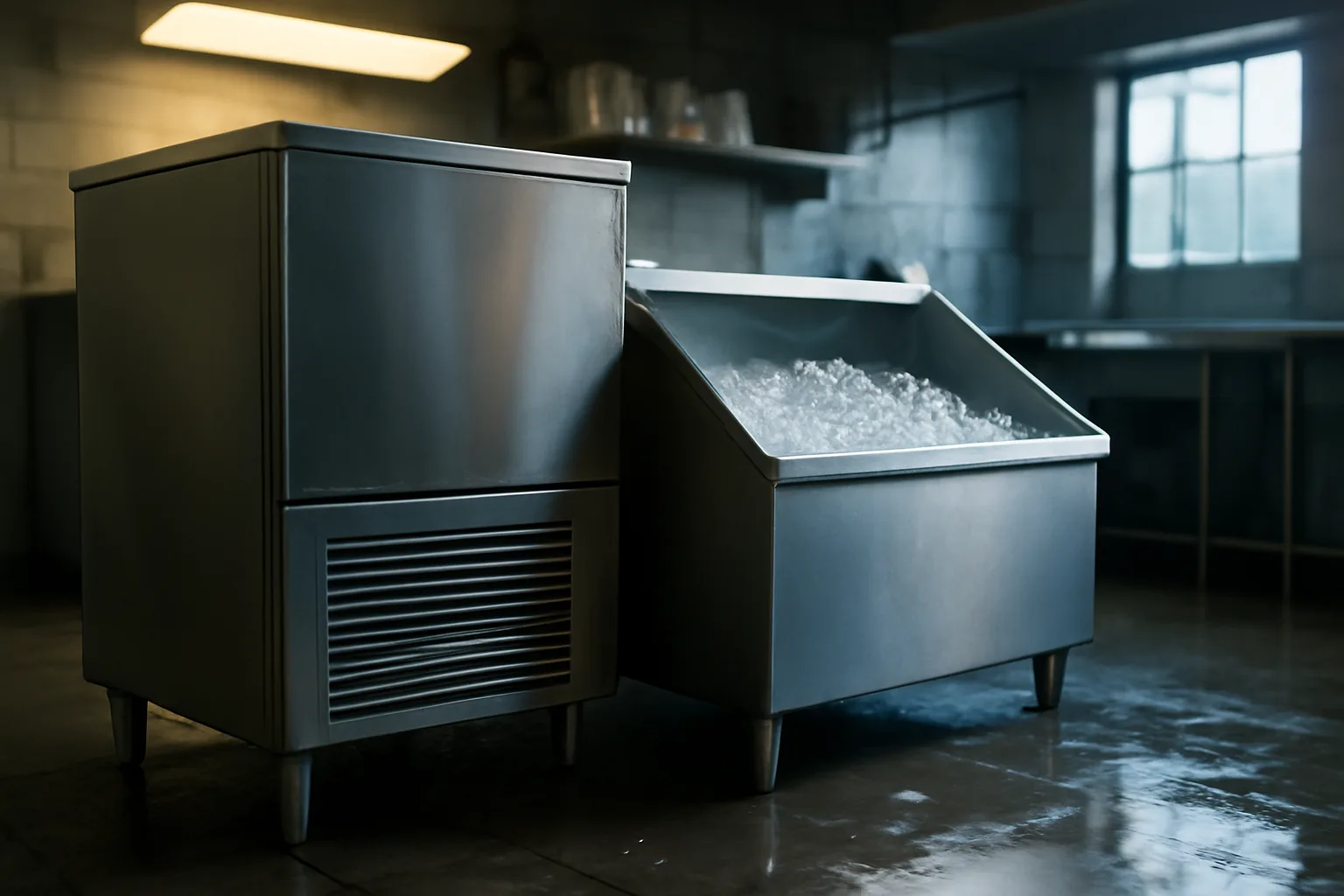
Ice-machine tech is field work on commercial ice makers. You install, clean, diagnose, and repair the machines that put ice in restaurants, hotels, hospitals, c-stores, and stadiums. Water, refrigeration, electricity, and food-contact surfaces show up on the same call.
People mash this into generic HVAC. Some overlap is real. Compressors, metering devices, and recovery are refrigeration. The rest is ice. Harvest cycle. Water trough. Evaporator scale. Bin switch. Purge. And a health inspector who treats that ice like food, because the FDA Food Code 2022 defines food to include ice. [4]
You will see cube, nugget, flake, and some scale ice. Air-cooled units choke on kitchen grease. Water-cooled units die when the condenser loop is junk. Undercounter machines cook themselves in tight closets. Hotel ice rooms look easy until you find six machines sharing one bad drain.
I would not call this a separate legal occupation in most states. Boards file you under HVACR, refrigeration contractor, or mechanical. BLS does the same. It parks the work inside heating, air conditioning, and refrigeration mechanics and installers. [6] That bucket also holds furnace techs, so national wage numbers are a proxy. Nobody publishes a clean federal series for ice-only routes.
Dealers, independent service companies, and in-house facilities crews all hire ice-machine tech work. Dealers see more warranty boards. Independents see more filthy evaporators and owners who want a miracle for $90. Facilities crews see the same machine every week, which is a gift if you like preventing failures instead of performing them.
If you like restaurants at 6 a.m. and mineral scale under your nails, you'll like it. If you wanted new-construction split systems and a clean van, this will bore you.
How do you start ice-machine tech?
You start ice-machine tech by getting EPA Section 608 certification, then asking your state contractor board what HVACR or refrigeration paper actually applies, then learning food-safe cleaning. Do the federal refrigerant card first. It is the paper almost every shop will ask to see. [1]
Here is the order I would follow.
Sit Section 608. Type II matches most commercial ice machines (high-pressure appliances). Universal is the better buy if you might also touch small appliances or low-pressure equipment later. EPA does not hand you a state contractor license. It only covers refrigerant handling. [2]
Call the state board, and the city if they still run mechanical cards. Ask a plain question: does ice-machine service for hire need a contractor license, a journeyman card, or just employment under a licensed shop? Answers split. California publishes a C-38 refrigeration classification that includes ice making. [9] Florida defines air-conditioning contractor classes that include refrigeration systems in section 489.105. [14] Other states barely notice you if you stay an employee.
Then get on a truck. A helper seat beats a pricey private HVAC diploma you do not need yet. Trade school is fine if you cannot read a schematic. It is a weak spend if you already run a meter.
Learn the food side on purpose. Ice is food. [4] Health departments fail accounts for slime in a bin. Your cleaning steps are part of the product, not extra.
OEM classes for common cube machines come after you can recover refrigerant without making a mess. A factory PDF is not a government license.
Confirm every fee and exam date with the board or the EPA-approved testing org. Do not treat a blog's old dollar figure as law. Nobody here can promise a processing time or an approval.
Do you need EPA 608 to work on ice machines?
Yes, if you maintain, service, repair, or dispose of ice machines that contain regulated refrigerants. EPA Section 608 is not optional because the unit sits in a bar instead of on a roof. The implementing rules live in 40 CFR Part 82, Subpart F. [1] [3]
EPA says, "Section 608 of the Clean Air Act requires that all persons who maintain, service, repair, or dispose of appliances that contain regulated refrigerants be certified in proper refrigerant handling techniques." [1]
40 CFR 82.161 is the technician certification section. It is the rule shops mean when they say "show me your 608." [2]
Type I is small appliances. Type II is high-pressure. Type III is low-pressure. Universal is all three. Commercial ice machines are typically high-pressure, so Type II is the minimum that matches the equipment. I would sit Universal. Extra sitting time is small. Showing up later with only Type I is a dumb argument.
You still cannot vent. 40 CFR 82.154 sets the prohibition on knowing release of refrigerant. [13]
Sales of ozone-depleting refrigerants and many non-exempt substitutes are restricted to certified technicians. Read EPA's Section 608 rules before you assume the supply house will sell to you on a smile. [3]
EPA does not publish a federal exam price. Tests run through EPA-approved certifying organizations. Confirm the current charge with them.
If you only wipe bins and never open the refrigeration circuit, some shops keep you as a cleaner. The moment you recover, charge, or replace a sealed-system part, you need the card. Pretending a spray bottle is "service" while you crack a service valve is how people get themselves and the shop in trouble.
What state license do ice-machine techs actually need?
It depends on the state, and on whether you work as an employee or take jobs under your own name. There is no federal ice-machine contractor license. HVACR and refrigeration contractor laws are state paper, sometimes city paper. Confirm with the board that prints the card.
California's C-38 refrigeration classification, as CSLB describes it, covers refrigeration equipment and ice making, including machinery and piping used in the production of ice. [9] That does not mean every W-2 ice-machine tech in California must hold a C-38. Contractor licenses often sit on the business. Employees may need a different registration, or none. I am not your lawyer. Call CSLB.
Florida puts contractor definitions in section 489.105 of the Florida Statutes, including air-conditioning classes that include refrigeration systems. [14] Holding a Class A card is not automatically required for every ice cleaning employee. Bidding work to the public is a different story.
Taking restaurant side jobs on a 608 card alone is how people get fined. If you advertise ice-machine tech repair, you are usually in contractor territory.
For how those cards stay alive after you are in, state notes differ. Read ice-machine tech renewal in california or ice-machine tech renewal in florida if those are your boards, then verify on the board site.
I would not buy a full contractor license in year one if a licensed shop will hire you. Bond, exam, and experience hours can wait until you actually bid work. Paying for a wall license so you can wash evaporators on someone else's insurance is a waste of money.
How long does ice-machine tech training take?
Plan on days to weeks for EPA 608, then months to years for a contractor license if your state even wants one from you. 608 is a test. Many people sit it after a short prep course. State contractor exams plus documented hours can run years. Confirm with the board. No one can guarantee a date.
BLS lists a postsecondary nondegree award as typical education for HVACR mechanics and installers. [6] That is a statistical label for a huge occupation group. It is not a legal minimum for ice-machine tech work in every state.
If you already hold 608 and can read a meter, a shop can put you on cleanings fast. Diagnostics on a failing harvest cycle take longer. I would budget a year of supervised calls before you pretend you have seen every controller fault.
Study for 608 like a rules test, because it is one. Core material is ozone, recovery, leak rules, and what you are not allowed to dump in the alley. Type II adds high-pressure appliances. Do not cram from a random answer dump. Sit a practice test from an EPA-approved program.
Skip the "licensed in 30 days, six figures" courses. They sell panic. They do not call your board.
Apprenticeship is a solid path if you want broader HVACR, not only ice. It is slower. It is also how you stop being the person who only knows one nugget machine.
What does an ice-machine tech do in year one?
Year one is mostly cleaning, scale, dirty condensers, clogged filters, failed pumps, and inlet water valves. You will chase no-ice calls that are a tripped bin switch or a restaurant that shut the water off. Sealed-system work shows up. Not every day.
Health-facing work is not extra credit. CDC's ice machine toolkit for Legionella control states that ice machines can be a source of Legionella and other waterborne pathogens, and it walks through cleaning and maintenance in buildings with water management programs. [8] That hits hospitals and long-term care harder than a taco shop. The cleaning discipline still transfers.
Lock the energy out before you put hands in an auger or a cutter grid. OSHA standard 29 CFR 1910.147 covers servicing machines where unexpected startup or stored energy could injure you. [7] Ice makers have cutters, gearmotors, and live electrical. People get cut.
Carry a cleaning log. Accounts like paper. You like not getting blamed for last month's slime.
Pay for a scale remover and a sanitizer the machine maker accepts. Random bleach recipes ruin stainless and still fail a swab.
If you want model-specific route paper for common Manitowoc and Hoshizaki cubes in one pile, IceMachinePath sells a $149 one-time Route Kit. You do not need it to be legal. OEM manuals and a notebook also work. IceMachinePath is an independent publisher, not a law firm and not a service company.
Learn water. Hard water eats evaporators. Bad drains backwash bins. A cheap filter bypass is a future no-ice call with your name on it.
Which refrigerants are in commercial ice machines?
Most commercial ice machines still use HFC blends or, on many newer small units, R-290 (propane). You will also meet older R-404A machines and some R-134a. The charge is on the nameplate. I will not invent a fake national mix percentage. Read the plate.
HFCs sit under the AIM Act phasedown. EPA's HFC program changes what gets produced and imported over time. [15] That does not ban service on existing machines overnight. It does mean new installs drift, and supply houses get picky about what they will sell you.
R-290 is flammable. Brazing, leak checking, charge limits, and storage change. If you treat it like 404A, you are the hazard.
ENERGY STAR publishes efficiency criteria for commercial ice machines, which is why a new cube head can use less energy and water than the 1998 brick in the basement. [10] An efficiency mark is not a license.
Recover. Weigh in. Stop guessing charges by sound.
If a unit uses a blend, you charge liquid. If you do not know what that sentence means yet, you are not ready to open the system unsupervised. That is not an insult. It is how compressors die on your second week.
Why does the health department care about ice machines?
Because ice is food. The FDA Food Code 2022 says food means "a raw, cooked, or processed edible substance, ice, beverage, or ingredient used or intended for use or for sale in whole or in part for human consumption, or chewing gum." [4] Inspectors use that model code, or a state retail code built from it.
Dirty ice makes people sick. Slime in the bin is not cosmetic. Water filters, air gaps, scoop storage, and a clean evaporator are food protection.
CDC's ice machine pages in the Legionella control toolkit cover cleaning, flushing, and when a healthcare ice machine should come out of service. [8] If you work hospitals, read it. If you work bars, still clean like someone will swallow the ice. They will.
A food handler card is sometimes a local health department rule for people who work on food equipment. It is not EPA 608. Confirm with the county. I would get it if the county is cheap and fast. I would not fly to a multi-day food manager course just to descale a cube machine.
NSF/ANSI 12 is the equipment standard many departments look for on automatic ice makers. A random residential unit under a cafe bar is a fight you do not want. Tell the owner before you become the person who "approved" it by installing it.
What tools are worth buying for ice-machine tech?
Buy gauges legal for the refrigerants you touch, a recovery machine, a vacuum pump, a charging scale, a leak detector, a clamp meter, nut drivers, evaporator brushes, a mirror, and a pump for cleaner. Bring scoops and bags you did not steal from the bin. That kit earns money.
Skip a giant extra recovery tank collection in year one. Skip mystery "fits all ice machines" plastic parts from random marketplaces. Skip a second micron gauge until you break the first.
A combustion analyzer is a waste if you only do ice.
Electrical work practices still apply. OSHA 29 CFR 1910.333 sets safety-related work practices around electric power and live parts. [12] De-energize when you can. Ice machines sit on wet floors. That is not a metaphor.
A simple hardness test beats guessing why the evaporator looks like a cave.
I would not build a $15,000 truck in month one. A clean, working recovery setup matters more than vinyl graphics. Shops have seen techs with a wrap and no vacuum pump.
Food-safe habits are tools too. Do not set dirty coils on a bag of ice. Do not use the customer's scoop as a pry bar. Health inspectors are not joking, and neither is the manager who just failed a visit.
How much do ice-machine techs get paid?
There is no honest ice-only wage series from BLS. The closest occupation group is heating, air conditioning, and refrigeration mechanics and installers. Pull the current median annual wage from the BLS Occupational Outlook Handbook page for that title, because BLS refreshes it. [6] Treat it as a national HVACR proxy, not a cube-route salary study.
Hotel and hospital ice can pay better than residential service. Some restaurant routes pay worse and smell like fryer oil. Commission on parts is common. Flat-rate cleaning contracts are how you stop living on no-ice callbacks.
I will not invent a per-machine cleaning price. Markets differ, and the owner who wants a $49 "tune-up" is not your target. I would not quit a stable HVAC job for ice based on social media. Ride along first.
Self-employed ice-machine tech work needs the contractor paper your state requires, auto and liability insurance, and a truck that is not also the family car. Confirm insurance with a broker. Anyone quoting you a national premium in an article is guessing.
Overtime and holiday-eve ice calls are real. If you hate nights before Super Bowl Sunday, stay on planned maintenance and walk away from that shop's on-call rotation.
Do you need factory training to be an ice-machine tech?
No. Factory training is not a substitute for EPA 608 or a state contractor license. Machine makers run classes so you do not brick a controller. Shops like the certificate. Boards do not treat it as a license.
I would take OEM training after you have 608 and a few months of cleanings. Sitting a factory class with zero field context is how you forget the wiring diagram on the drive home.
Online micro-certs that claim to replace 608 are garbage. They do not.
Software, harvest-assist parts, and board replacements are where OEM info pays off. Water-cooled head pressure problems are where a senior tech pays off.
Service manuals beat marketing one-pagers. Download the actual document for the serial you are staring at. Using the wrong cleaning procedure for a coated evaporator is an expensive way to learn model numbers.
How do you keep ice-machine tech licenses current?
Keep 608 proof on you, card plus a photo. State contractor cards do expire. Renewal windows, CE hours, and fees are board-specific. Confirm with the board. No timing guarantees, and no article can quote your current fee without going stale.
If you work ice-machine tech renewal in arizona, ice-machine tech renewal in colorado, ice-machine tech renewal in georgia, or ice-machine tech renewal in alabama, use those notes as a map, then verify on the live board site. Same idea for ice-machine tech renewal in connecticut and ice-machine tech renewal in hawaii.
Watch EPA updates on substitutes and sales restrictions, because the gas in the machine changes faster than your state license cycle. [3] [15]
For a paper-path checklist you can keep in the truck, start at /start. IceMachinePath publishes kits and state notes. It does not license you and it does not call the board for you.
Frequently asked questions
What is ice-machine tech?
Ice-machine tech is install, cleaning, diagnosis, and repair of commercial ice makers. You work water systems, refrigeration, electrical, and food-contact surfaces. Most states file the job under HVACR or refrigeration contracting, not a separate ice license. EPA Section 608 still applies when you open a refrigerant circuit.
How do you start ice-machine tech?
Get EPA Section 608 first, usually Type II or Universal. Then ask your state contractor board whether ice work for hire needs a license or can be done as an employee of a licensed shop. Learn food-safe cleaning, because ice is food under the FDA Food Code. Confirm fees and dates with the board. Nobody can promise approval time.
Is EPA 608 required if I only clean ice machines?
If you never maintain, service, repair, or dispose of the refrigerant circuit, some shops use uncertified helpers for bin cleaning only. Opening service valves, recovering, charging, or replacing sealed-system parts requires Section 608 certification under 40 CFR Part 82, Subpart F. Do not split hairs with a gauge set in your hand.
Should I get Type II or Universal 608 for ice machines?
Type II matches most commercial ice machines because they are high-pressure appliances. Universal covers Type I, II, and III. I would sit Universal. The extra test time is small, and it keeps you hireable if the shop also has reach-ins or other equipment.
Can I run ice-machine side jobs with only a 608 card?
Often no. 608 is federal refrigerant handling, not a contractor license. If you advertise repair to restaurants under your own name, state contractor or mechanical laws usually apply. Employees of a licensed shop are a different case. Confirm with your board before you print magnets.
How much does the EPA 608 exam cost?
EPA does not set a federal exam price. EPA-approved certifying organizations charge their own fees, and those numbers move. Confirm with the testing org you will actually sit. Ignore old dollar figures on blogs. They are not a regulation.
Do ice-machine techs need a food handler card?
Sometimes, if the local health department requires it for people who work on food equipment. It is separate from EPA 608 and from HVACR contractor paper. Confirm with the county. A cheap local card can be worth it. A long food-manager course is usually overkill for machine service.
What refrigerants will I see in commercial ice machines?
Nameplates still show HFC blends such as older R-404A and R-134a, plus a growing number of R-290 (propane) units. Read the plate every time. HFCs are under EPA's AIM Act phasedown for production and import. That does not mean you vent leftover 404A or guess a charge.
Does manufacturer certification replace a license?
No. OEM training is product knowledge. EPA Section 608 is refrigerant law. State boards issue contractor or journeyman cards. A factory certificate will not satisfy 40 CFR 82.161 or a contractor statute. Take OEM class after you have 608 and some field time.
How often should a commercial ice machine be cleaned?
Follow the machine maker and the account's water. Heavy scale or grease may mean monthly. Cleaner water and a good filter can stretch that. Healthcare buildings with water management programs should follow CDC ice-machine guidance for Legionella control, which is stricter than a bar's habit of waiting until the ice tastes funny.
Can you start ice-machine tech as a helper?
Yes, and I would. Ride with a certified tech, do cleanings, learn water and harvest symptoms, then sit 608 before you open a circuit. Helper time beats an expensive diploma if you already have electrical sense. You still need the 608 card before recovery or sealed-system repair.
Does residential fridge experience cover commercial ice machines?
Not really. A kitchen fridge 608 Type I card is the wrong type for most commercial ice machines, and the ice-making mechanics are different. Harvest, water distribution, and food-contact sanitation do not come from domestic refrigerator work. Sit Type II or Universal and learn ice on purpose.
Which board do I call first?
Call the state contractor or mechanical board that licenses HVACR or refrigeration. Ask about employees versus contracting to the public. Then ask the local health department about ice as food equipment. EPA-approved testing orgs handle 608, not your state board. Confirm fees there. Do not trust a third party to quote a current board fee.
Is lockout/tagout really part of ice-machine tech?
Yes. Augers, cutter grids, and gearmotors will hurt you. OSHA 29 CFR 1910.147 covers servicing machines where unexpected startup or stored energy could cause injury. Kill power, verify, then work. Wet floors and live ice machines are a bad mix even when the call "is only a cleaning."
Sources
- U.S. EPA, Section 608 Technician Certification: Section 608 of the Clean Air Act requires all persons who maintain, service, repair, or dispose of appliances containing regulated refrigerants to be certified in proper refrigerant handling.
- eCFR, 40 CFR 82.161 Technician certification: Federal technician certification requirements for persons performing maintenance, service, repair, or disposal of appliances containing class I, class II, or non-exempt substitute refrigerants.
- U.S. EPA, Section 608 of the Clean Air Act: EPA implements Section 608 through 40 CFR Part 82, Subpart F, covering technician certification, venting, sales restrictions, and related stationary refrigeration rules.
- U.S. FDA, Food Code 2022: The FDA Food Code 2022 defines food to include ice and is the model retail code many health departments adopt or adapt.
- U.S. FDA, Food Code 2022 full document (PDF): Food Code 2022 text defining food as including ice and defining ice as the product obtained by freezing potable water.
- U.S. BLS, Occupational Outlook Handbook: HVACR mechanics and installers: BLS groups refrigeration work in this occupation, lists typical education as a postsecondary nondegree award, and publishes the current national wage and outlook figures for the group.
- OSHA, 29 CFR 1910.147 The control of hazardous energy (lockout/tagout): OSHA lockout/tagout applies to servicing and maintenance of machines where unexpected energization, startup, or release of stored energy could injure employees.
- CDC, Controlling Legionella in ice machines: CDC identifies ice machines as potential sources of Legionella and other waterborne pathogens and publishes cleaning and water-management guidance.
- California CSLB, C-38 Refrigeration classification: CSLB's C-38 refrigeration classification includes ice making and related machinery, piping, and equipment used in the production of ice.
- OSHA, 29 CFR 1910.333 Selection and use of work practices: OSHA requires safety-related electrical work practices, including de-energizing live parts when possible before work.
- eCFR, 40 CFR 82.154 Prohibitions: Federal prohibitions on knowing release (venting) of refrigerants from appliances during maintenance, service, repair, or disposal.
- Florida Statutes, section 489.105 Definitions: Florida contractor definitions in 489.105 include air-conditioning contractor classes whose scope includes refrigeration systems.
- U.S. EPA, Frequent Questions on the Phasedown of Hydrofluorocarbons: EPA implements the AIM Act HFC production and consumption phasedown, which affects supply of common ice-machine refrigerants over time.