Last updated 2026-08-21
TL;DR
Ice-machine tech is commercial ice-maker service, not a national license. Start with EPA Section 608, then your state's HVAC or refrigeration card if they issue one. Pay tracks the HVACR wages BLS reports. Year one is recovery gear, a van, insurance, and local accounts. Confirm paper with the board that covers your shop. Manufacturer classes beat generic ice-business courses.
What is ice-machine tech?
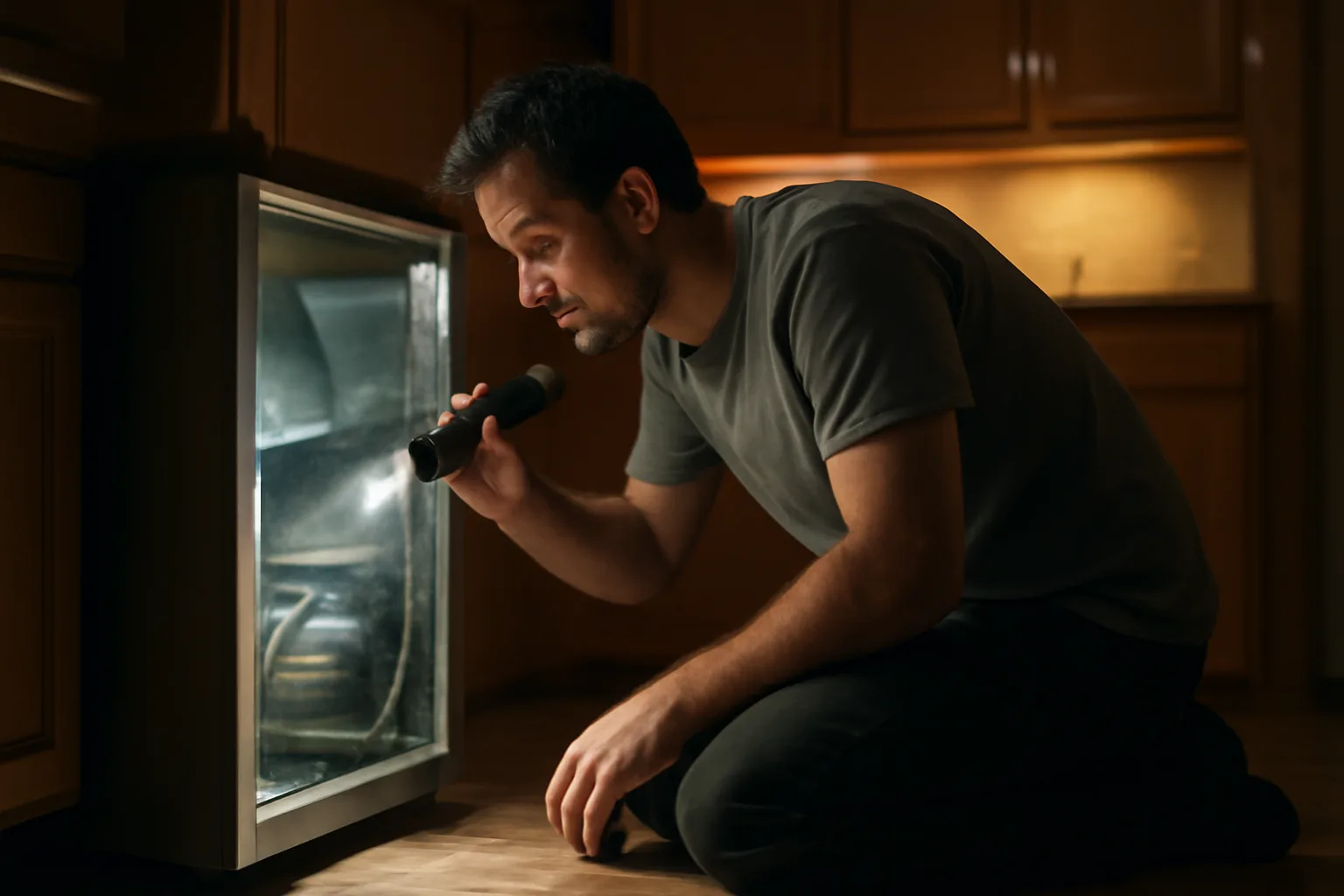
Ice-machine tech is field service on commercial ice makers in restaurants, hotels, c-stores, and healthcare. You clean, diagnose, repair, and install cube, nugget, and flake systems. It is refrigeration work with a water circuit and a food-contact bin bolted on. It is not its own federal occupation. The work sits inside HVACR.
You live in the gap between a failing harvest cycle and a manager who needed ice twenty minutes ago. Scale, dirty condensers, weak pumps, inlet valves, bin controls, and refrigerant leaks eat most of the week. The rest is sanitation. Ice sits in a bin that people scoop with whatever is handy. That is a food problem, not only a mechanical one.
Nobody issues a federal ice-machine technician license. EPA regulates refrigerant handling. State boards may regulate HVAC or refrigeration contracting. Local health rules treat ice as food. Those three stacks overlap on every call.
If you like mechanical puzzles in hot kitchens, the work fits. If you want a desk, it does not. The skill that pays is a clean diagnosis under time pressure. A wall of certificates does not.
A working tech carries recovery gear, gauges or a digital manifold, a vacuum pump, a scale, nickel-safe cleaner, sanitizer, filters, and a leak detector. You will spend more hours on water and airflow than on adding refrigerant. Charging a leaker without a repair is a bad habit. It can also be a Section 608 violation.[1]
How do you start ice-machine tech?
You start by passing EPA Section 608, then checking the HVAC or refrigeration license your state board actually issues, then buying recovery gear and getting on real machines. There is no national ice-machine license. Do not buy a route before the paper is real.
Sit Universal 608 if you can. Type II covers most high-pressure commercial ice makers. Small undercounter units can fall under Type I. Universal stops the guessing. EPA lists the certifying organizations. Testers set their own exam prices, so confirm that number with the program you pick. EPA does not publish a single federal fee.[1][13]
Next, call the board. An employee working under a licensed contractor is not the same as a shop that advertises and invoices on its own. California refrigeration contracting sits in CSLB class C-38. Texas uses Occupations Code Chapter 1302 for air conditioning and refrigeration. Florida defines air-conditioning contractor classes in statute 489.105. Other states barely touch a W-2 service tech. Confirm it yourself. Do not copy a forum post from 2014.[7][6][8]
If you form a shop, get an EIN from the IRS when you need one, then follow the SBA license-and-permit path for local business paper. Recovery equipment has to meet EPA rules before you pull a single ounce. I would work under an experienced tech for a stretch before bidding restaurant accounts alone. Buying a Facebook "ice route" first is a waste of money.[11][12][10]
Do you need EPA 608 certification for ice machines?
Yes. If the ice machine uses a class I, class II, or substitute refrigerant, EPA Section 608 certification applies before you maintain, service, repair, or dispose of it. Most commercial ice makers fall under Type II. I would take Universal so you are not guessing on small undercounter units.
EPA's technician page says, "Technicians who maintain, service, repair, or dispose of equipment that could release refrigerants into the atmosphere must be certified." That sentence is the whole federal core. Ice machines are stationary refrigeration, not a special carve-out.[1]
The regulation is 40 CFR 82.161. It requires Type I, Type II, Type III, or Universal certification for that work, with a narrow exception when an uncertified person is in the physical presence of a certified tech and under direct supervision. Do not build a business on the exception. Boards and customers will still ask for your card.[2]
Section 609 is motor vehicle air conditioning. It does not replace 608. An automotive card will not cover a Manitowoc in a hotel basement. If someone sold you that story, ignore it.[15]
Core plus the type exams is the usual path. Closed book at most testing sites. Keep the certificate. You will be asked for it on job applications, by some building owners, and anytime a recovery cylinder or a supply house wants to see paper.
What state license do ice-machine techs actually need?
It depends on the state and on whether you are a W-2 employee or a contracting business. There is no single ice-machine card. Confirm forms, exams, and fees with the board that has jurisdiction. Nobody here can promise an approval date.
California treats refrigeration contracting under CSLB classification C-38. That class covers constructing, installing, maintaining, servicing, and repairing refrigerators and refrigerated rooms. A C-38 is a contractor license path, not a field-tech badge you print at home. Employees of a licensed contractor play by different rules. Read the classification, then call CSLB.[7]
Texas licenses air conditioning and refrigeration work under Occupations Code Chapter 1302, administered by TDLR. Technician and contractor classes are not the same thing. Florida defines Class A and Class B air-conditioning contractors and related mechanical work in section 489.105. Pulling permits and advertising as a contractor is where people get in trouble, not wiping a condenser for their boss.[6][8]
Some states barely license the W-2 service tech. That is not a loophole you should assume. Check the ice-machine tech board in california, the ice-machine tech board in florida, and the same notes for georgia, arizona, colorado, alabama, and connecticut.
I would not advertise independent ice-machine service until the board says you can. Fines cost more than the exam.
How much does ice-machine tech pay?
BLS does not publish an ice-machine-only wage. The closest federal category is heating, air conditioning, and refrigeration mechanics and installers. "The median annual wage for heating, air conditioning, and refrigeration mechanics and installers was $57,300 in May 2023." The lowest tenth earned less than $37,270. The highest tenth earned more than $91,020. Read the live Occupational Outlook Handbook table, because BLS replaces the year each cycle.[3]
Independent ice-machine billing can sit above that median on paper. It can also sit below it after you subtract the van, insurance, unpaid drive time, and the week a compressor job goes sideways. Nobody has a clean national dataset for ice-only shops. Treat social media hourly rates as ads.
BLS projected 9 percent employment growth for that HVACR occupation from 2023 to 2033, faster than average. That is demand for refrigeration skill, not a promise you will be busy in your county.[3]
Restaurant work runs nights and weekends. Hotels pay for quiet, documented PM. Healthcare sites add infection-control expectations. I would take a W-2 refrigeration seat for a year before I underbid every independent in town. Learning harvest logic on someone else's warranty callback is cheaper than learning it on your own insurance.
What first-year tools and paper should you budget?
Budget EPA 608 first, then a recovery machine that meets EPA equipment rules, then the van, then insurance if you go independent. Exact dollars move by brand and by state. Confirm tester fees, board fees, and insurance quotes. I will not invent them.[10][13]
You need a way to recover refrigerant, a vacuum pump, a scale, a leak detector, gauges or a digital manifold, nickel-safe ice-machine cleaner, sanitizer, and common water filters. A nitrogen setup helps on brazed repairs. A $4,000 inspection camera in month one is a waste of money. So is a brand-new van payment that eats every PM contract you have not won yet.
Paper is boring and it is the job. EIN if you need one as a shop. Local business license through the path SBA outlines. Contractor application only if you are actually contracting. General liability and commercial auto if you roll up to a hotel as a business. Tool coverage is optional until you cannot replace a manifold out of pocket. Ask a broker. Do not copy a stranger's policy limits.[11][12]
A paper pack can wait. IceMachinePath sells a $149 one-time Manitowoc/Hoshizaki Route Kit, which is optional. I would spend first on 608, a recovery unit, and cleaner.
Skip the ultrasonic jewelry bath, the logo wrap, and the "territory fee." None of that diagnoses a failed purge valve.
How is ice-machine work different from regular HVAC?
Ice-machine work is refrigeration with a water system and a food bin. Comfort cooling does not harvest ice, dump freeze water, or sit on a health inspector's punch list. That is the whole difference that matters on a Tuesday night.
Cube machines freeze, harvest, and refill. Nugget and flake machines chew or scrape ice continuously. Bin controls, curtain switches, water level probes, and harvest valves fail in ways a rooftop RTU never will. Air-cooled condensers choke on kitchen grease. Water-cooled units fight tower water and scale. In some counties, hard water kills more machines than failed compressors do.
You still braze, recover, evacuate, and weigh in a charge. You still follow lockout and tagout before you stick a hand near a fan. The extra skill is reading a water circuit and a harvest sequence without parts-cannoning every solenoid.[5]
I would learn scale, filtration, and sanitizing before I obsessed over superheat on a machine that has not been cleaned in two years. A dirty evaporator looks like a refrigerant problem until you actually look.
What refrigerants and safety rules apply on ice machines?
Older commercial ice makers often used HFC blends such as R-404A. Newer small machines increasingly use R-290 (propane), an A3 flammable refrigerant. Substitutes still sit under Section 608. You recover them. You do not vent them because the tag reads "natural."[2][1]
The AIM Act directs EPA to phase down HFC production and consumption. That is why you now see hydrocarbon ice makers and new blend names on spec sheets. Confirm the actual charge and safety group on the nameplate before you open the system. I would not treat every undercounter unit like an old R-404A cube machine.[9]
R-290 work needs leak discipline, ignition-source awareness, and the right recovery practice for flammables. If nobody has shown you that process, do not improvise in a restaurant kitchen.
Electrical safety is still OSHA's 1910.333 rules on when you may work energized. Lockout and tagout is 1910.147. Ice machines have cutters, fans, and hot gas valves that will injure you while you "just check one thing." Kill the power. Prove it dead.[14][5]
Mixing leftover refrigerant because the drum is almost empty is sloppy and it ruins a diagnosis. Weigh the charge the manufacturer published. If you cannot, stop and recover.
Is manufacturer training worth the money?
Yes, if you will actually see those tags. Factory classes from the brands on your local machines beat generic "ice empire" courses. I would skip NATE until an employer pays for it.
Manitowoc, Hoshizaki, Scotsman, and Ice-O-Matic still dominate a lot of foodservice ice. Their error codes, harvest logic, and water-system quirks are not identical. A weekend with the brand you service every week pays. A weekend with a brand you never see does not.
Manufacturer training does not replace 608. It does not replace a state contractor license. It also does not replace cleaning a condenser. People skip the cleaning and then blame the board.
I would not buy a franchise that confuses bagged-ice vending with ice-machine repair. Those are different businesses. One fills bags. The other recovers refrigerant and sanitizes a bin.
How do you get the first ice-machine accounts?
You get the first accounts from kitchens you can walk into, not from a national lead mill. Restaurants, hotels, c-stores, and property managers already own the machines. Quarterly cleaning contracts beat panic leak calls.
Health inspectors drive a lot of this work because ice is food. A cloudy bin or a filthy scoop is a write-up waiting to happen. Offer documented PM with filter dates and sanitizer logs. That is more useful than a clever logo.[4]
Do not buy a "route" from a stranger without seeing every serial number, every leak history, and every filter. People sell dying water-cooled machines as passive income. They are not.
W-2 work at a refrigeration shop is a valid start. You learn warranty paperwork and you are not the only person holding a recovery cylinder at 1 a.m. When you leave, take your 608 card and your habits, not the shop's customer list unless a contract says you can.
What food-safety rules hit ice as a food?
Ice used as food has to be made from drinking water. That is not a slogan. FDA Food Code 2022 section 3-202.16 states, "ICE used as FOOD or as a cooling medium shall be made from DRINKING WATER." If the machine is tied to a dirty line or a failing filter, you are in the food chain, not only in HVAC.[4]
Bins, scoops, and splash zones grow slime when nobody cleans them. Healthcare sites care even more, because ice machines have shown up in environmental infection-control guidance for years. Confirm the facility's water-management rules before you "just open it up" in a hospital kitchen.
Your job is mechanical and sanitary. Nickel-safe cleaner on the evaporator. A sanitizer the maker accepts. Hands out of the bin. A scoop that is not stored in the ice. Tell the manager once, in writing, if the bin is a biology experiment. Then you have a record.
I would refuse to put a machine back in service if the water supply is obviously unsafe. You can replace a pump and still serve bad ice.
What should you skip in year one?
Skip buying a territory. Skip working without 608. Skip energized fan work because you are in a hurry. Skip charging by the pound of refrigerant as a business model. Skip any course that promises a national ice-machine license. That license does not exist.
Lockout and tagout is not optional theater. OSHA 1910.147 is the federal LOTO standard for controlling hazardous energy. Ice-machine cutters do not care that the restaurant opens in twelve minutes.[5]
Skip mixing bagged-ice vending with repair work in your head. One needs a different set of permits and a different insurance conversation. Confirm both with the agencies that actually issue them.
Year one operations look like this. 608 card in the wallet. Board status confirmed. Recovery machine that meets 40 CFR 82.158. A used van that starts. A short PM list you can finish. Manufacturer notes for the tags you actually see. That is enough.[10]
IceMachinePath is an independent publisher, not a law firm and not a service company. Nothing here is a promise of a license or a processing time. For a simple start page, see /start. Confirm every fee and form with the board that has jurisdiction over your shop.
Frequently asked questions
What is ice-machine tech?
Ice-machine tech is commercial ice-maker service: cleaning, diagnosis, repair, and some install work on cube, nugget, flake, and dispenser systems. It is HVACR refrigeration plus water treatment plus food-contact sanitation. It is not a separate federal occupation. EPA 608 covers refrigerant handling. State boards may add HVAC or refrigeration contractor paper. Confirm your board.
How do you start ice-machine tech?
Pass EPA Section 608 (Universal is the card I would sit), then ask your state HVAC or refrigeration board what employees versus contractors need. Buy recovery equipment that meets EPA rules. Get on real machines under someone experienced if you can. Local PM accounts beat a purchased "route." Confirm every fee with the tester and the board. No federal ice-machine license exists.
Do I need EPA 608 Universal or is Type II enough?
Type II covers most high-pressure commercial ice makers. Type I can apply to small appliances under the EPA size rules. Universal covers the types and stops the guessing when an undercounter unit shows up. I would sit Universal once. Confirm current exam outlines with an EPA-listed certifying organization, because testers administer the test, not EPA staff on site.
Does a Section 609 automotive A/C card count on ice machines?
No. Section 609 is motor vehicle air conditioning. Section 608 is stationary refrigeration, which is what ice machines are. A 609 wallet card does not authorize you to maintain, service, repair, or dispose of a restaurant ice maker that uses regulated refrigerants. Sit 608. Keep the certificate. Supply houses and employers will ask for it.
How much does the EPA 608 exam cost?
EPA does not set a single national exam fee. Listed certifying organizations and their testing sites set prices, and those prices move. Confirm the current amount with the program you choose before you pay. Budget for Core plus the type exams if you sit them separately. I would not buy a bundled "business in a box" just to get 608.
Can I service ice machines as a W-2 employee without a contractor license?
Often yes, if you work under a contractor the state already licenses, but that is not true in every state and it is not true if you advertise independently. California C-38, Texas Chapter 1302, and Florida 489.105 are contractor-side statutes. Employee rules differ. Confirm with the board that covers your shop before you print invoices with your own name.
Is ice legally treated as food?
Yes, when it is used as food or as a cooling medium. FDA Food Code 2022 section 3-202.16 requires that ice used as food or as a cooling medium be made from drinking water. Bins, scoops, and dirty water filters are food-safety problems, not only mechanical ones. Health inspectors care. Your PM notes should too.
What recovery equipment does EPA require?
You need recovery equipment that meets the performance rules in 40 CFR 82.158 for the appliance type you service. A hardware-store vacuum pump is not a recovery machine. Confirm the unit is certified for the refrigerant class you will pull, including flammables if you will work R-290. Do not start ice-machine work with a piercing valve and a prayer.
Do I need a plumbing license to hook up the water line?
Sometimes. Water supply and drain work can fall under plumbing or mechanical codes even when the refrigeration side is yours. A quick "add a saddle valve" job is how techs walk into permit trouble. Ask the local building department and your state board. I would not assume an HVAC card covers every water connection in every city.
How long does state licensing take?
It varies by board, exam seats, background checks, and whether you applied as an employee tech or as a contractor. No honest guide can quote a current processing time that stays true next month. Confirm with the board. Ignore anyone who guarantees an approval date. Incomplete applications are what usually stretch the calendar, not a secret quota.
Should I buy an ice route or a franchise to start?
I would not, not first. You cannot price machines you have not seen. Dying water-cooled units get sold as passive income. Bagged-ice vending is a different business from ice-machine repair, with different permits. Get 608, board status, recovery gear, and a few PM accounts. If a route still looks clean after you inspect every serial number, revisit it.
What insurance do independent ice-machine techs carry?
Most independents look at general liability and commercial auto before anything fancy. Tool coverage is optional until a stolen manifold would stop the week. Some hotels ask to be named additional insured. Limits belong in a broker conversation, not a blog number. Confirm what your state and your customers actually require. Skipping auto coverage on a van full of recovery cylinders is a bad bet.
Sources
- 40 CFR 82.161 Technician certification: Type I, Type II, Type III, or Universal certification is required to maintain, service, repair, or dispose of appliances that use class I, class II, or substitute refrigerants, with a limited supervised exception.
- U.S. BLS Occupational Outlook Handbook, HVACR mechanics and installers: Median annual wage was $57,300 in May 2023; lowest 10 percent earned less than $37,270 and highest 10 percent more than $91,020; 9 percent projected growth from 2023 to 2033.
- FDA Food Code 2022 (PDF): Section 3-202.16 requires ice used as food or as a cooling medium to be made from drinking water.
- OSHA 29 CFR 1910.147 The control of hazardous energy (lockout/tagout): Federal lockout/tagout standard for controlling hazardous energy during servicing and maintenance.
- Texas Occupations Code Chapter 1302, Air Conditioning and Refrigeration Contractors: Texas statutes license air conditioning and refrigeration contracting and related technician work under Chapter 1302.
- California CSLB C-38 Refrigeration classification: C-38 refrigeration contractors construct, install, maintain, service, and repair refrigerators, refrigerated rooms, and related systems.
- Florida Statute 489.105 (2023), contractor definitions: Florida law defines air-conditioning and related contractor classes that cover refrigeration contracting activity.
- U.S. EPA, AIM Act HFC phasedown: The AIM Act directs EPA to phase down hydrofluorocarbon production and consumption, which is shifting ice-machine refrigerant choices.
- 40 CFR 82.158 Standards for recycling and recovery equipment: EPA sets performance standards for refrigerant recovery and recycling equipment used when servicing appliances.
- IRS, Apply for an Employer Identification Number (EIN) online: Shops that need an EIN apply through the IRS online EIN process.
- U.S. SBA, Apply for licenses and permits: SBA outlines the federal, state, and local license and permit path for a new business.
- U.S. EPA, Section 608 technician certification programs: EPA lists organizations authorized to certify Section 608 technicians; testers administer exams and set their own fees.
- OSHA 29 CFR 1910.333 Selection and use of work practices: OSHA electrical work-practice rules limit when employees may work on energized equipment.
- U.S. EPA, Section 609 motor vehicle air conditioning certification: Section 609 covers motor vehicle air conditioning and is separate from Section 608 stationary refrigeration certification.